
Emergency Tree Removal After Storm Damage Guide

Emergency Tree Removal: What to Do After Storm Damage
Severe storms can turn a peaceful property into a dangerous scene in minutes. Strong winds, heavy rain, and lightning can bring down trees or weaken them enough to create hidden hazards. Knowing what to do next is critical. This guide on Emergency Tree Removal: What to Do After Storm Damage will help you respond safely, avoid further damage, and understand when to call professionals.
After a storm, the situation is often stressful and unpredictable. A fallen tree may block your driveway, damage your roof, or bring down power lines. In other cases, a tree may still be standing but severely weakened, posing a future risk. This is where proper storm damage tree cleanup guide knowledge becomes essential.
In this detailed article, you’ll learn step-by-step actions to take after a storm, how professionals handle emergency tree removal services, and how to protect your property from further harm.
Understanding the Risks After Storm Damage
After extreme weather, trees may look stable even when they are not. A tree that has shifted roots, cracked branches, or internal trunk damage can fall without warning.
This is why post storm tree safety is extremely important. Even if the tree is still standing, it may already be structurally compromised.
Many homeowners underestimate these risks and attempt cleanup too quickly. However, storm-damaged trees can collapse unexpectedly, especially when the soil is saturated or winds continue.
Authorities like emergency management agencies often recommend staying away from damaged trees until a full assessment is completed.
First Steps After a Storm Hits Your Property
The first priority is safety. Before thinking about cleanup, ensure that everyone is safe and away from hazardous areas.
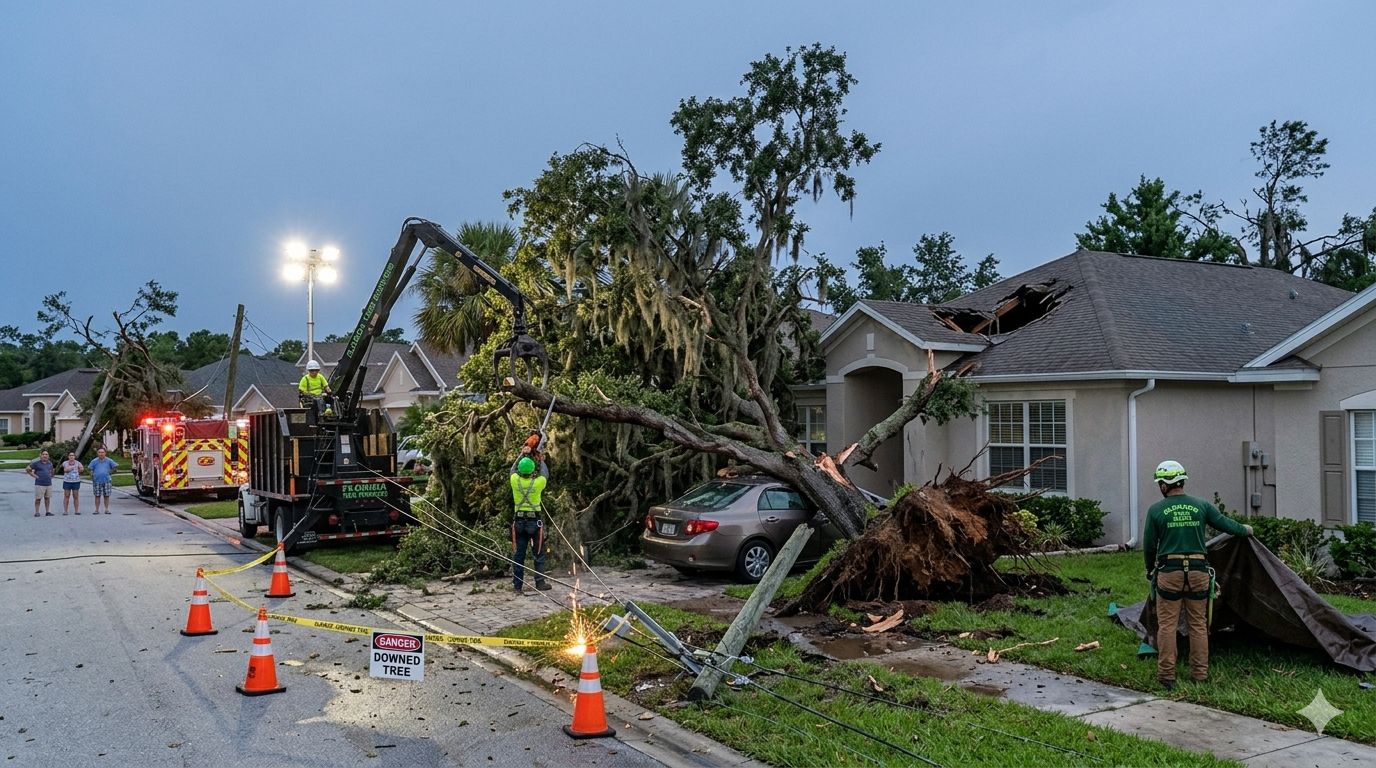
If a tree has fallen on your home or vehicle, avoid touching it. There may be hidden electrical hazards or unstable branches above.
This is where emergency storm cleanup services become essential. Professionals are trained to assess danger zones and handle complex removals safely.
If you are searching for urgent tree removal near me, this is typically the stage where calling experts becomes necessary.
How to Assess Tree Damage Safely
Once the storm has passed and it is safe to observe your property, you can begin a visual inspection from a distance.
Look for obvious signs such as broken branches, leaning trunks, exposed roots, or hanging limbs. These are strong indicators that hazardous tree removal services may be required.
However, avoid standing directly under damaged trees. Even small branches can fall unexpectedly.
A key part of storm damage tree cleanup guide practices is identifying which trees are salvageable and which pose immediate danger.
Fallen Trees: What to Do First
A fallen tree removal after storm situation is one of the most urgent scenarios homeowners face.
If a tree has fallen on a structure, do not attempt to move it yourself. The weight distribution may be unstable, and removing parts incorrectly can cause further damage.
If the tree is blocking access roads or driveways, avoid cutting it without proper equipment. Professional teams providing 24/7 tree removal services are equipped to handle these emergencies safely and efficiently.
In many cases, utility companies must also be contacted if power lines are involved.
When a Tree Is Still Standing but Dangerous
Not all storm-damaged trees fall immediately. Some remain upright but are structurally weak.
These trees may have split trunks, cracked branches, or partially uprooted roots. This makes them unpredictable and dangerous.
This is where emergency tree removal services play a critical role. Experts can determine whether the tree can be saved or must be removed completely.
Ignoring these signs can lead to delayed collapse, especially during the next rain or wind event.
The Emergency Tree Removal Process Explained
Understanding how professionals handle emergency tree removal: what to do after storm damage helps you make informed decisions.
The process usually begins with a rapid site assessment. Experts evaluate risks such as structural instability, electrical hazards, and property damage.
Next, they create a controlled removal plan. Depending on the situation, they may use cranes, ropes, or sectional cutting methods.
In complex cases, such as trees leaning on buildings, precision is critical. This ensures that debris is removed without causing additional damage.
Finally, the site is cleared, and hazardous materials are safely disposed of. This structured approach is what makes hazardous tree removal services so important in post-storm recovery.
Why DIY Tree Removal After Storms Is Dangerous
Many homeowners consider removing trees themselves to save money or time. However, storm-damaged trees are far more dangerous than they appear.
Hidden cracks, unstable soil, and tensioned branches can cause sudden movement when cut. This is a major reason professionals handle emergency storm cleanup services instead of untrained individuals.
Even small mistakes can lead to serious injury or property damage.
This is why experts strongly recommend contacting professionals instead of attempting DIY solutions during emergency situations.
Real-World Scenario: Storm Damage Recovery
Imagine a strong typhoon hitting a residential area. A large mango tree falls across a driveway, blocking access and damaging part of a fence.
The homeowner initially considers cutting it into pieces but notices that power lines are nearby. Instead of risking safety, they contact 24/7 tree removal services.
Within hours, professionals arrive, assess the situation, and safely remove the tree using controlled cutting methods. The driveway is cleared, and further damage is prevented.
This scenario shows how proper post storm tree safety decisions can prevent accidents and speed up recovery.
Cost Factors in Emergency Tree Removal
The cost of emergency tree removal services depends on several factors, including tree size, location, severity of damage, and accessibility.
Trees near structures or power lines often require specialized equipment, which increases cost. Similarly, large fallen trees require more labor and time.
While costs may seem high during emergencies, delaying removal can lead to even greater expenses due to secondary damage.
How Professional Services Help During Emergencies
After a storm, time and safety are critical. This is where professional support becomes invaluable.
Companies like Cornerstone Enterprises provide structured response solutions for storm-related property damage. Their experience in handling storm damage tree cleanup guide situations ensures that risks are managed efficiently and safely.
Their approach focuses on quick assessment, controlled removal, and complete site cleanup. In urgent situations, having access to reliable professionals can significantly reduce stress and prevent further damage.
If you are dealing with storm aftermath, reaching out for expert assistance is often the safest choice.
Frequently Asked Questions
What should I do immediately after a tree falls on my property?
Ensure safety first. Avoid the area, check for electrical hazards, and contact emergency tree removal services before attempting any cleanup.
Can a storm-damaged tree be saved?
In some cases, yes. If damage is minor, arborists may prune and stabilize the tree. However, severely damaged trees often require removal.
How fast can emergency tree removal be done?
Many providers offer 24/7 tree removal services, and response times can range from a few hours to same-day depending on conditions.
Is insurance likely to cover storm damage tree removal?
In many cases, homeowner insurance covers fallen tree removal after storm if the damage affects structures or access points.
Conclusion: Acting Fast After Storm Damage Matters
Understanding emergency tree removal: what to do after storm damage can make a major difference in protecting your property and ensuring safety. Storm-damaged trees are unpredictable, and delaying action can increase risks significantly.
By recognizing hazards early, avoiding unsafe DIY actions, and contacting professionals, you can prevent further damage and restore safety to your property much faster.
Storm recovery is never easy, but having a clear plan helps reduce stress and improve outcomes. Professional teams like Cornerstone Enterprises are equipped to handle urgent situations with care and efficiency, ensuring your property is restored safely and quickly.
If you’re dealing with storm damage or want to prepare for future emergencies, now is the right time to explore reliable emergency storm cleanup services and keep your property protected year-round.