
Palm Tree Trimming
Palm tree trimming in Bay, Walton, Gulf & Okaloosa County
Palms aren’t hardwoods and they shouldn’t be trimmed like them. Fronds, seed pods and boots cleared without over-pruning the crown — which is what weakens a palm for years.
Our Work
Palms we’ve trimmed
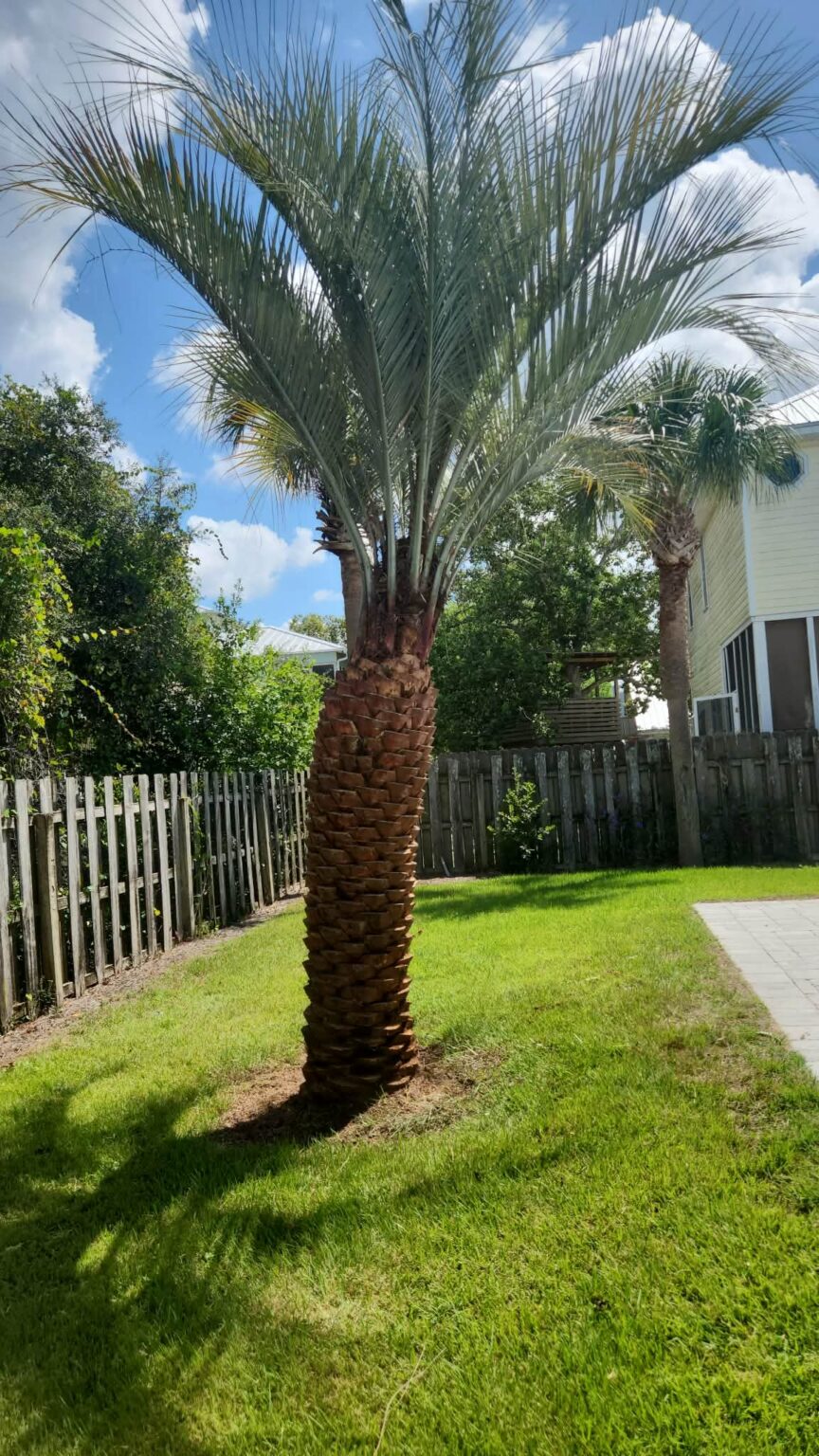
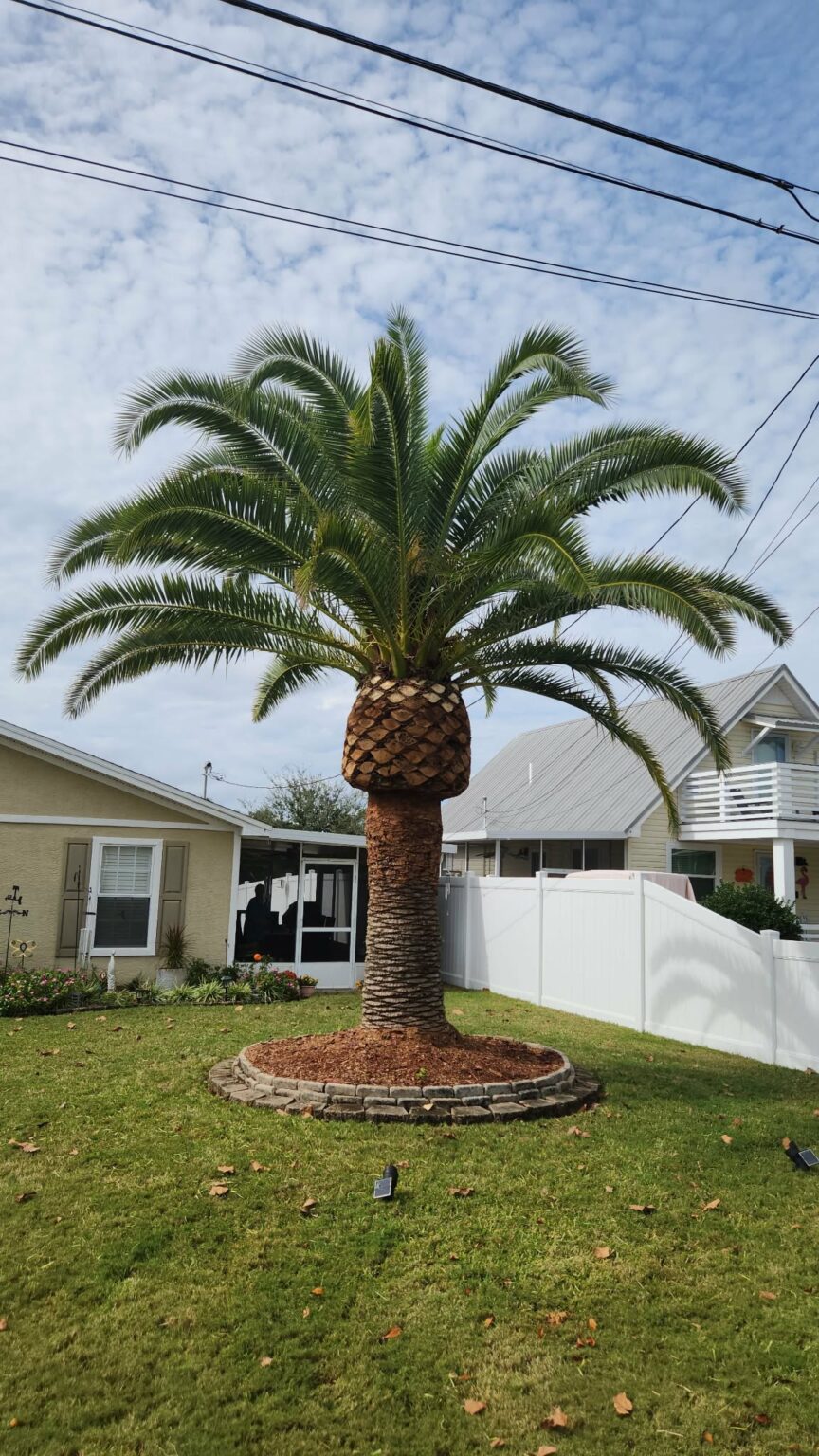
Why Palms Are Different
The most common mistake is taking too much
A palm can’t regrow a damaged trunk or heal a wound the way a hardwood does. Over-prune it and you’re looking at the consequences for years.
No “Hurricane Cut”
Stripping a palm back to a few upright fronds is sold as storm prep. It isn’t. It weakens the tree, slows growth and makes it more vulnerable, not less.
Green Fronds Feed The Tree
Healthy green fronds are how a palm makes food. Removing them starves it. We take dead and dying fronds, not living ones that simply hang low.
Seed Pods And Boots
Flower stalks and seed pods pull energy from the tree and drop mess everywhere. Old boots harbour pests. Both come off.
Clean Cuts, Clean Tools
Palms are vulnerable to disease spread on dirty blades. Tools get cleaned between trees — it matters more with palms than anything else we cut.
Salt And Nutrients
Coastal palms here deal with salt spray and sandy soil. Yellowing fronds are often a nutrient problem, not a pruning problem, and we’ll say so.
Full Cleanup
Fronds and pods hauled away. Palm debris is heavy and awkward and we don’t leave it with you.
What Customers Say
On our palm work
“These guys were amazing! Competitively priced and quick to get us scheduled. My palm trees were very neglected and they even educated me on what to do to make them thrive. They also were very considerate of my outdoor pets. 10/10 I will hire them again.”
Jenine Llewellyn
Verified customer review
The Process
How it works
01
Send A Photo
A picture of the palms and roughly how tall they are.
02
Free Price
Based on height, number of palms and access. Clear figure, no obligation.
03
Trimmed Properly
Dead fronds, seed pods and boots. Living crown left intact.
04
Cleared And Advised
Debris hauled, and we’ll tell you what your palms actually need going forward.
Where We Work
Across four counties
Questions
Palm trimming FAQ
How often do palms need trimming?
Most do well once or twice a year, depending on species and how much seed pod they throw. More often than that usually means someone is removing healthy fronds, which does more harm than good.
Should I get a hurricane cut before storm season?
No. Stripping a palm back to a few upright fronds is widely sold here and it’s bad for the tree. It removes the food supply, slows recovery and leaves the palm weaker. Proper trimming removes dead material and seed pods — that’s the useful storm prep.
What does palm trimming cost?
Height is the main factor, plus how many palms and whether we need a lift to reach them. Send a photo and we’ll give you a firm price at no charge.
My palm has yellowing fronds — is that a trimming issue?
Usually not. On this coast yellowing is more often a nutrient deficiency or salt stress. We’ll tell you what we’re seeing rather than just cutting and leaving.
Do you take the debris away?
Yes, always. Fronds and seed pods are heavy and awkward, and leaving them is not a finished job.
Can you trim tall palms?
Yes. Height changes the equipment and therefore the price, so mention roughly how tall when you ask.
Get Started
Palms looking neglected?
Send a photo and we’ll tell you what they need — which is often less than you’d expect.
By town
Palm trimming in your town
Where we work
Palm tree trimming across Northwest Florida
We cover Bay, Walton, Gulf and Okaloosa County. Pick your town to see what we do there and how quickly we can usually get to you.
“They trimmed the palm tree but left it full as requested and cleaned up the entire area.”
By species
Palms we work on in the Panhandle
Each species is trimmed differently. These pages cover how to identify yours, what it actually needs, and the mistakes worth avoiding.
Sabal Palm
Florida’s state tree. Boots on or off is your call.
Washingtonia Palm
Very tall, with a dead frond skirt that is a real fire risk.
Queen Palm
Heavy seed pods, frizzle top, and cold-marginal here.
Canary Island Date Palm
The big pineapple-cut one. Spined, and disease-sensitive.
Sylvester Palm
Slimmer Phoenix, usually diamond-cut.
Date Palm
Suckering and multi-trunked, with fruit that drops.
Pindo Palm
Silver-blue arching fronds and fruit that stains.
Windmill Palm
Hairy trunk, compact, toughest of the lot in cold.
European Fan Palm
Clumping and multi-stemmed, with spiny stalks.
Chinese Fan Palm
Weeping leaf tips, and holds dead fronds stubbornly.
Bismarck Palm
Huge silver fans. Heavy, and the most freeze-sensitive.
Sago Palm
Not a palm — a cycad, and toxic to dogs.
Saw Palmetto
Native, ground-hugging, saw-toothed stalks.